
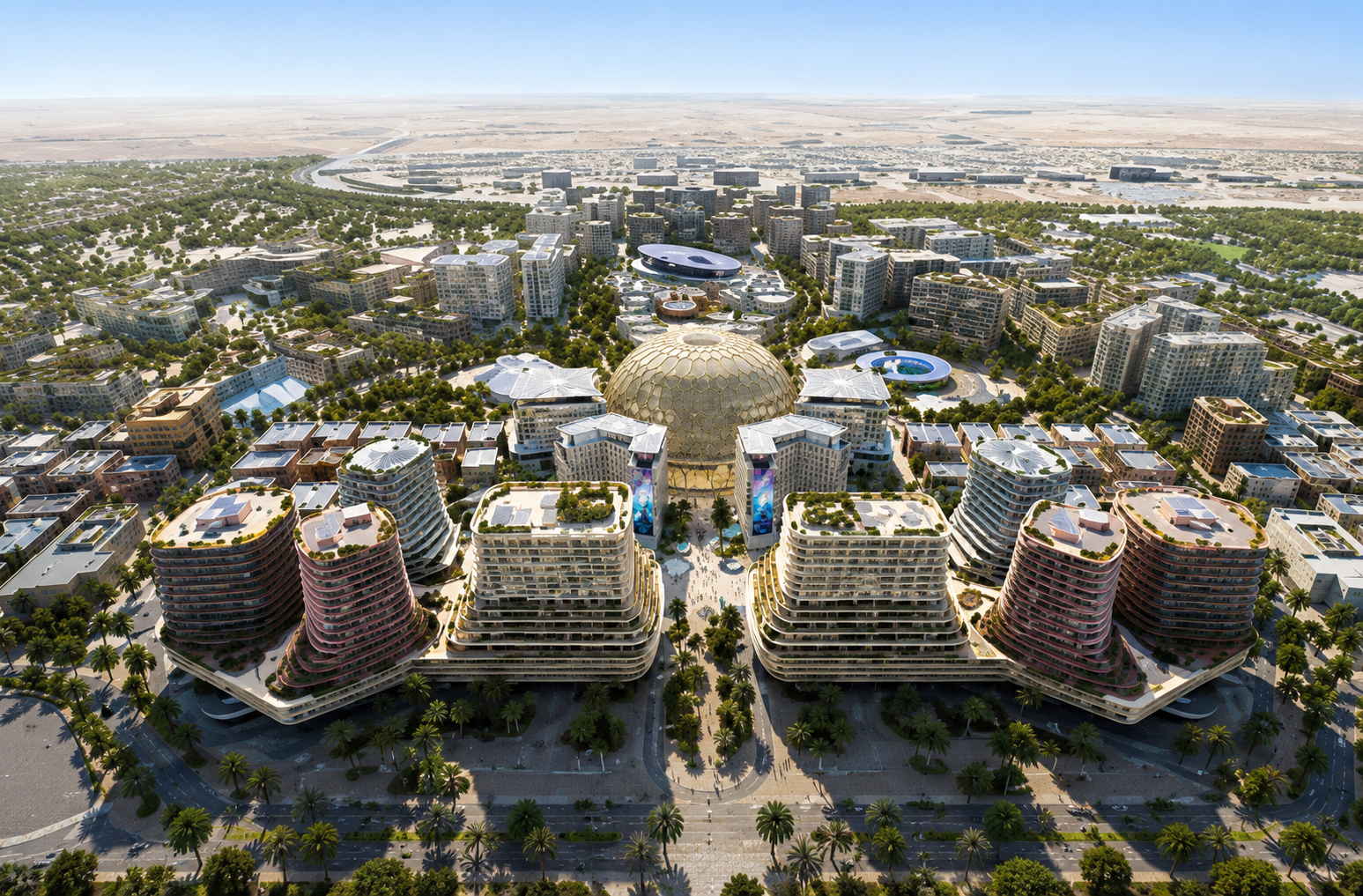
aldar studio city enters the UAE market at a time when investors are increasingly prioritizing cash-flow durability over speculative appreciation. In a market where luxury launches dominate headlines, this project targets a more operationally stable segment tied to employment-driven housing demand.
For investors evaluating real estate ROI Dubai alternatives and Abu Dhabi growth corridors, the project’s positioning matters more than branding alone. Its potential value comes from tenant sustainability, accessible price points, and integration with a growing media and production ecosystem rather than short-term speculation.
The core investment question is straightforward: can aldar studio city maintain occupancy and rental pricing better than competing mid-market developments over the next five to seven years?
How aldar studio city aligns with Abu Dhabi’s economic shift
The UAE property market is increasingly separating into two investment categories. One relies heavily on luxury tourism and global capital inflows. The other is tied to domestic employment expansion and long-term residential absorption.
aldar studio city fits into the second category. The project benefits from Abu Dhabi’s broader strategy to expand media, entertainment, production, and knowledge-based sectors. That distinction matters because residential demand generated by employment ecosystems tends to produce more stable occupancy than purely investor-driven districts.
Aldar Properties has historically focused on master-planned communities with integrated infrastructure rather than isolated speculative towers. Investors evaluating long-duration holding periods should view that development philosophy as a stabilizing factor.
Unlike highly volatile luxury districts, employment-linked communities generally experience smaller rental contractions during slower market cycles.
Where aldar studio city sits within the current pricing environment
One of the project’s strongest investment characteristics is relative affordability compared with premium Abu Dhabi waterfront inventory and upper-tier property price Dubai segments.
Entry pricing appears positioned below luxury freehold districts while still offering modern infrastructure and institutional-grade development standards. This creates a pricing advantage for yield-focused investors seeking stronger cash-flow efficiency.
For example, if studio and one-bedroom inventory enters between AED 750,000 and AED 1.2M depending on layout and release phase, the acquisition cost remains substantially lower than many branded projects competing for similar investor capital.
That pricing differential directly impacts rental yield sustainability. Lower acquisition costs reduce dependency on aggressive appreciation assumptions and improve the probability of maintaining positive cash flow.
The payment plan structure also matters strategically. Flexible installment schedules reduce capital lock-in risk and allow investors to preserve liquidity during the construction cycle. In a higher-interest-rate environment, that flexibility becomes materially important.
What the rental math realistically suggests
The investment case for aldar studio city is primarily yield-driven rather than appreciation-driven. Based on comparable residential communities connected to employment clusters in Abu Dhabi, gross rental yield expectations between 6.5% and 8% appear achievable under stabilized conditions.
That range compares favorably against several central Dubai apartment segments where pricing inflation has compressed rental returns.
A realistic scenario illustrates the economics more clearly. A unit acquired at AED 900,000 generating annual rental income between AED 62,000 and AED 70,000 would produce a healthy gross return profile before expenses.
After accounting for service charges, vacancy assumptions, maintenance reserves, and management fees, net ROI could reasonably settle near 5.5%–6.5%.
For investors comparing real estate ROI Dubai opportunities, those numbers remain competitive without requiring speculative resale assumptions to justify the investment.
The critical point is this: income performance alone may support the investment thesis even if capital appreciation slows temporarily.
Why tenant demand here could remain structurally resilient
Projects tied to economic ecosystems generally outperform isolated residential inventory during weaker transaction cycles. aldar studio city benefits from that dynamic because its demand drivers extend beyond pure speculation.
Media professionals, freelancers, production staff, remote workers, and younger professionals increasingly prioritize integrated live-work environments over traditional suburban housing.
The surrounding ecosystem within Yas Island and adjacent growth corridors continues attracting business activity and infrastructure investment. That matters because rental stability depends less on marketing and more on actual population movement.
Communities with diversified tenant profiles also reduce concentration risk. A broader tenant mix improves occupancy resilience compared with districts dependent on one demographic segment.
For investors, this creates a stronger probability of stable rental income Dubai-focused portfolios increasingly require.
A practical investor allocation example
Assume an investor allocates AED 3M into UAE residential property today. One option would involve purchasing a single premium apartment in central Dubai with lower yield potential and greater pricing sensitivity.
An alternative approach could involve acquiring three smaller units within aldar studio city or similar employment-linked developments.
If combined net rental income reaches AED 180,000 annually while maintaining diversified tenant exposure, the investor improves both cash-flow stability and vacancy risk management.
This allocation model increasingly mirrors institutional real estate strategies. Diversification across multiple income-producing assets often produces more predictable long-term performance than concentration in a single high-priced property.
That logic becomes even more relevant during periods of slower appreciation.
How aldar studio city compares against competing projects
Compared with luxury Abu Dhabi launches, aldar studio city offers weaker short-term prestige positioning but potentially stronger yield efficiency.
Against outer Dubai apartment communities, the project may deliver more stable tenant retention because of its employment-oriented ecosystem. Several peripheral Dubai communities continue experiencing elevated speculative activity that can distort pricing fundamentals.
Relative to older Abu Dhabi apartment inventory, aldar studio city benefits from newer infrastructure, stronger sustainability standards, and institutional-grade master planning.
The trade-off is that appreciation velocity may remain moderate rather than explosive. Investors seeking rapid flipping opportunities may prefer more momentum-driven markets.
However, investors prioritizing durable income streams may view that moderation as an advantage rather than a weakness.
Which investor profile matches this project best
The project appears best suited for income-oriented investors rather than aggressive capital-gain speculators.
Long-term landlords, regional portfolio allocators, and investors seeking exposure below premium pricing thresholds are the most natural fit. The lower acquisition base reduces downside exposure while supporting stronger yield mechanics.
End-users also represent an important demand layer. Communities balancing investor participation with genuine resident occupancy generally maintain healthier pricing stability over time.
That balance reduces the probability of speculative oversupply destabilizing the market immediately after completion.
Risks investors should evaluate carefully
The largest risk is pipeline competition. Abu Dhabi continues expanding residential supply across multiple growth corridors, and oversupply pressure could temporarily affect occupancy and rental pricing.
Another consideration is execution timing. Infrastructure completion, tenant ecosystem growth, and surrounding commercial activation all influence long-term performance.
Liquidity risk should also be acknowledged. Mid-market apartment communities may not achieve the same resale velocity as prime waterfront assets during bullish periods.
Investors should therefore approach aldar studio city as a medium-to-long-duration income strategy rather than a short-term trading opportunity.
The strategic variable most investors overlook
Many investors focus excessively on launch pricing while ignoring tenant retention economics. In reality, stable occupancy often matters more than headline appreciation.
Projects integrated with employment and lifestyle ecosystems generally maintain stronger renewal rates because tenants become operationally connected to the area rather than purely opportunistic renters.
If Abu Dhabi’s media and creative sectors continue expanding over the next decade, residential demand linked to those industries could strengthen materially.
That possibility creates a long-term structural advantage few speculative projects can replicate.
Final investment judgment on aldar studio city
aldar studio city is not structured as a speculative luxury asset designed for rapid short-term appreciation. Its investment thesis is fundamentally different.
The project’s value proposition depends on affordability relative to premium markets, employment-linked rental demand, sustainable yield mechanics, and lower acquisition exposure.
For investors prioritizing recurring rental income Dubai alternatives, moderate appreciation potential, and diversified tenant demand, the project presents a financially rational opportunity.
For buyers seeking immediate speculative upside or ultra-prime positioning, stronger alternatives likely exist elsewhere in the UAE market.
FAQs
- Is aldar studio city designed more for investors or end-users?
The project appears balanced toward both groups, though its economics favor long-term rental investors.
Stable occupancy potential is central to the investment rationale. - What rental yield could investors realistically expect?
Projected gross rental yield may range between 6.5% and 8% under stabilized market conditions.
Net returns will depend on operating costs and vacancy management. - How does the project compare with property price Dubai investments?
Entry pricing is generally lower than premium Dubai apartment districts targeting global investors.
This can improve yield sustainability and reduce downside exposure. - Does the payment plan improve investment flexibility?
Yes, extended payment schedules reduce upfront capital concentration during construction phases.
That structure benefits investors managing broader portfolio liquidity. - What type of tenants are most likely to rent here?
Young professionals, media-sector employees, and remote workers are likely target demographics.
These groups typically prioritize integrated lifestyle-oriented communities. - Is appreciation potential strong or moderate?
The project appears positioned for moderate long-term appreciation rather than rapid speculative gains.
Its investment appeal is more income-driven than momentum-driven. - Could oversupply affect returns in the future?
Yes, pipeline expansion across Abu Dhabi remains a meaningful risk investors should monitor closely.
Rental pricing pressure can emerge if delivery volumes rise too quickly. - Why does location strategy matter for this project?
Employment-linked communities generally produce stronger tenant retention and occupancy resilience.
That stability can protect rental income during slower market cycles. - Would this suit a first-time UAE investor?
Potentially yes, especially for buyers prioritizing manageable entry costs and recurring cash flow.
The lower acquisition threshold reduces overall portfolio risk exposure. - What is the project’s biggest investment advantage?
Its strongest advantage is the combination of affordability and ecosystem-driven rental demand.
That positioning supports more sustainable long-term income performance.