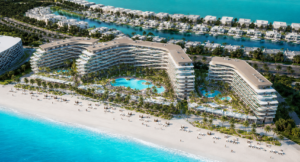
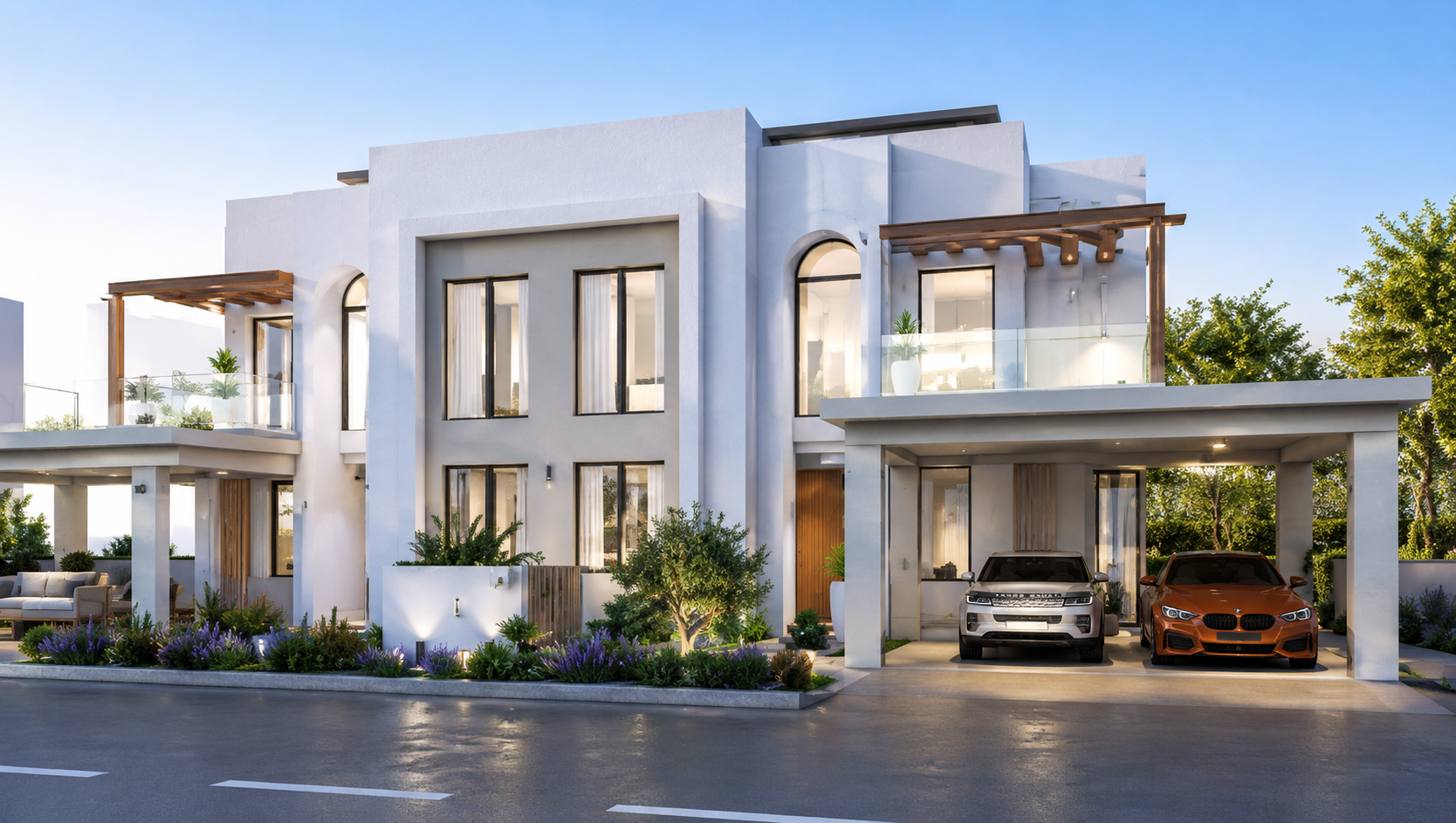
Hayat 6 is one of the newest residential releases within the wider Hayat master community in Dubai, developed by Dubai South Properties inside the rapidly expanding Dubai South district. The project consists of only 104 units, creating a significantly lower-density supply profile than many competing off-plan launches across the city.
For investors, the key question is not whether Dubai South will grow. The market largely accepts that thesis. The real question is whether Hayat 6 offers a sufficiently attractive entry point relative to the risks of buying into a district that remains in its development cycle.
The investment case depends on infrastructure expansion, employment growth around Al Maktoum International Airport, and the area’s ability to convert future residents into sustainable rental demand rather than speculative demand.
How the Dubai South Growth Story Is Actually Playing Out
Most off-plan investment Dubai opportunities depend heavily on future appreciation. Hayat 6 is no exception.
Dubai South spans approximately 145 square kilometers and has been planned as a major aviation, logistics, and commercial hub. Long-term government plans target hundreds of thousands of jobs and substantial population growth around the district. The expansion of Al Maktoum International Airport remains the single largest catalyst supporting future housing demand.
From an investor perspective, this matters because employment-driven demand typically creates more stable occupancy than purely lifestyle-driven locations. Areas supported by logistics, aviation, and industrial growth tend to experience deeper rental demand during weaker market cycles.
The counterargument is timing. Infrastructure-led appreciation often takes longer than investors expect. Capital can remain tied up for several years before meaningful pricing inefficiencies disappear.
Where Hayat 6 Sits on Dubai’s Pricing Curve
Official pricing remains limited because the project is still in its launch phase. Comparable Hayat townhouses within the same master community have traded between approximately AED 3.4 million and AED 5.4 million depending on size and configuration.
Using prevailing Dubai South pricing benchmarks, investors can estimate entry levels around AED 1,050–1,250 per square foot, which remains lower than many established villa and townhouse communities across Dubai.
This lower entry price matters because appreciation potential is often strongest in districts where infrastructure value has not yet been fully reflected in pricing.
However, lower pricing alone is not an investment advantage. It only becomes attractive if future demand growth outpaces future supply growth.
Can Hayat 6 Deliver Competitive Rental Yield?
For investors focused on rental income Dubai, the numbers suggest moderate rather than exceptional cash flow.
Based on current Dubai South townhouse rental benchmarks, gross rental yields are likely to fall between 5.5% and 7.0% depending on unit type, acquisition cost, and market conditions at handover.
A simplified scenario illustrates the economics.
A townhouse acquired at AED 3.8 million generating annual rent of AED 240,000 would produce a gross yield of roughly 6.3%.
After service charges, maintenance allowances, vacancy assumptions, and leasing costs, the net yield could settle closer to 4.8%–5.5%.
Compared with apartment investments in communities such as JVC, Arjan, or Dubai Production City, Hayat 6 may produce slightly lower headline yields but potentially stronger tenant retention because of its family-oriented product profile.
The stronger investment angle therefore appears to be capital appreciation supported by infrastructure expansion rather than pure cash flow generation.
Why Tenant Quality May Matter More Than Yield Percentage
Many investors chase the highest rental yield property UAE opportunities without evaluating tenant quality.
Hayat 6 benefits from proximity to logistics centers, aviation facilities, Expo City, and future employment corridors. These employment clusters tend to attract longer-term residents rather than short-term tenants.
Longer tenancy periods reduce vacancy costs and leasing friction. Even if headline rental yields are marginally lower, total investment performance can improve because operational costs remain lower.
This creates a more defensive income profile than projects relying heavily on holiday rental demand or speculative tenant categories.
A Practical Investor Scenario: What Returns Could Look Like?
Consider an investor purchasing at AED 3.8 million before handover.
If the project achieves 15% appreciation by completion, the asset value could reach approximately AED 4.37 million.
If appreciation reaches 25%, the value could rise to roughly AED 4.75 million.
These ranges are broadly consistent with performance historically seen in successful early-phase master-planned communities, though they are not guaranteed. (APIL Properties)
Adding a 5% net rental return after handover could produce a blended annualized return in the 8%–12% range over a medium-term holding period.
The downside scenario is equally important.
If supply growth accelerates faster than employment growth, appreciation could remain limited to single digits while rental growth stalls. Under that outcome, returns would likely fall into the 4%–7% range.
How Hayat 6 Compares With Competing Investment Options
Compared with established communities such as Jumeirah Village Circle, Hayat 6 offers lower market maturity but potentially greater infrastructure-driven upside.
Compared with Dubai Hills Estate, entry costs remain significantly lower, although tenant depth and resale liquidity are currently weaker.
Compared with many newer launches in Dubailand, Hayat 6 benefits from stronger government-backed planning and a more clearly defined economic ecosystem linked to aviation and logistics.
For investors seeking the best property investment in Dubai through appreciation potential, Hayat 6 compares favorably.
For investors prioritizing immediate rental income, several completed communities may offer a better yield profile today.
Which Investor Profile Fits Hayat 6 Best?
Hayat 6 appears most suitable for investors with a five-to-ten-year horizon.
The project aligns with buyers seeking exposure to Dubai South’s growth trajectory before the district reaches full maturity.
End-users who expect to occupy the property after handover may also benefit because they capture both lifestyle utility and long-term appreciation potential.
Short-term speculators expecting rapid flips face greater uncertainty because future supply releases across Dubai South remain difficult to forecast.
The Risks Investors Should Not Ignore
The strongest risk is supply pressure.
Dubai continues launching large volumes of off-plan inventory, and future residential phases within Dubai South could dilute pricing momentum if absorption slows.
Liquidity risk also deserves attention. Resale markets in emerging districts are typically thinner than those in mature communities. Exiting an investment quickly may require price concessions.
Construction timelines represent another variable. Although government-backed master developers generally inspire confidence, project delays remain a possibility in any off-plan investment Dubai strategy.
A final consideration is opportunity cost. Capital allocated to Hayat 6 is capital unavailable for income-producing ready properties generating immediate cash flow.
The Strategic Observation Most Investors Miss
The most interesting aspect of Hayat 6 is not the project itself.
It is the mismatch between today’s residential pricing and the long-term economic significance of Dubai South.
Many investors focus on unit layouts and amenities. Institutional investors focus on employment creation, transportation infrastructure, and future population density.
If Dubai South successfully captures even a portion of its projected employment growth, residential demand could deepen materially over the next decade.
That makes Hayat 6 more of a strategic infrastructure play than a conventional residential investment.
Final Verdict: Is Hayat 6 Worth Investing In?
Hayat 6 presents a credible risk-adjusted investment case rather than an obvious bargain.
The project’s strongest attributes are limited unit supply, government-backed development, lower entry pricing relative to mature communities, and exposure to one of Dubai’s most important long-term infrastructure corridors.
Its weaknesses include uncertainty around future supply levels, delayed income generation due to off-plan status, and lower resale liquidity compared with established districts.
For investors seeking real estate ROI Dubai through long-term appreciation with moderate rental income, Hayat 6 deserves serious consideration.
For investors requiring immediate cash flow or near-term liquidity, completed properties in mature communities may represent a more efficient allocation of capital.
FAQs
- What rental yield can investors realistically expect from Hayat 6?
Most projections suggest gross yields between 5.5% and 7%, with net returns typically settling closer to 5% after operational expenses. - Is Hayat 6 primarily a cash-flow or appreciation investment?
The stronger thesis centers on capital appreciation linked to Dubai South’s infrastructure expansion rather than exceptional rental income. - Does Dubai South have enough tenant demand to support future growth?
Employment expansion around aviation, logistics, and commercial sectors provides a structural demand base that supports long-term occupancy. - How does Hayat 6 compare with JVC investments?
JVC offers stronger current liquidity and rental depth, while Hayat 6 potentially offers greater infrastructure-driven upside. - What is the biggest investment risk associated with Hayat 6?
Future residential supply growth across Dubai South could limit both rental growth and resale appreciation. - Could Hayat 6 outperform mature Dubai communities?
It could outperform on appreciation if Dubai South develops according to long-term economic and population forecasts. - Is buying before handover the best strategy here?
Early entry generally provides maximum appreciation potential but also exposes investors to development-cycle risks. - How important is the airport expansion to the investment case?
It is arguably the single most important growth catalyst supporting future residential demand in Dubai South. - Will resale liquidity be strong after completion?
Liquidity should improve as the community matures, though it may remain below levels seen in established districts. - Who should avoid investing in Hayat 6?
Investors requiring immediate rental income, rapid resale opportunities, or low development risk may find better alternatives elsewhere.