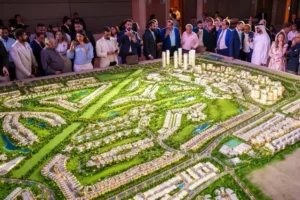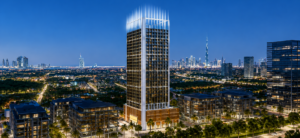

Valia Tower has emerged as one of the more closely watched residential launches within Dubai, largely because it sits at the intersection of affordability, infrastructure-led growth, and investor demand for income-producing assets. Deyaar Development developed this project within Dubai Islands’ broader growth corridor, targeting buyers looking for exposure to one of the city’s expanding residential markets.
The critical question for investors is not whether Valia Tower can attract buyers. The more important question is whether the expected returns justify the capital risk compared with alternative opportunities across Dubai’s increasingly competitive property market.
How Valia Tower Fits Into Today’s Dubai Investment Cycle
Dubai’s property market has moved beyond its post-pandemic recovery phase and entered a period where location quality matters more than broad market momentum.
Projects launched during this phase face a different investment environment than those launched between 2021 and 2023. Capital appreciation is becoming more selective. Investors are increasingly rewarded for choosing districts with sustainable demand drivers rather than relying on market-wide price inflation.
Valia Tower benefits from this shift because its surrounding district continues to attract infrastructure investment, population growth, and residential absorption. That creates a more durable foundation for future pricing power than purely speculative markets.
For investors evaluating the best property investment in Dubai, understanding where demand originates matters far more than headline marketing claims.
Where Valia Tower Sits Within the Current Pricing Landscape
The investment appeal of Valia Tower begins with its positioning on Dubai’s pricing curve.
Comparable off-plan apartments within similar emerging communities currently transact between AED 1,250 and AED 1,700 per square foot depending on configuration, floor level, and payment structure.
This places Valia Tower below pricing levels commonly seen in established locations such as Dubai Marina, Downtown Dubai, and Dubai Hills Estate while still offering access to long-term urban expansion.
A lower entry price creates two advantages.
First, investors require less capital to establish market exposure. Second, appreciation potential becomes more attractive if future infrastructure growth is not fully reflected in current valuations.
The challenge is that lower-priced markets often experience greater supply expansion. Investors must therefore assess whether future demand can absorb incoming inventory without compressing values.
Valia Tower Rental Yield Expectations Versus Acquisition Costs
Rental yield is where the investment case becomes more measurable.
Based on prevailing apartment leasing rates across comparable districts, gross rental yields for Valia Tower are likely to range between 6% and 8%.
An investor purchasing a unit for AED 1.1 million and generating annual rent of AED 75,000 could achieve a gross yield approaching 6.8%.
After accounting for service charges, maintenance reserves, vacancy assumptions, and agency costs, net yields may fall within a realistic 5% to 6% range.
Compared with many premium communities where property prices have risen faster than rents, Valia Tower may offer a better yield profile despite lower absolute rental income.
For investors prioritizing rental income Dubai, this distinction is significant because cash-flow sustainability often matters more than headline asset value.
Why Demand Quality Matters More Than Occupancy Rates
Many investors focus exclusively on occupancy percentages.
Institutional investors tend to focus on tenant durability.
Valia Tower’s target demographic includes professionals, mid-level managers, and long-term residents seeking access to major employment hubs while maintaining manageable housing costs.
This matters because stable tenants reduce turnover costs, vacancy periods, and leasing friction.
Higher tenant retention often improves total investment performance even when rental growth remains moderate.
The strongest rental markets are not necessarily those with the highest rents. They are often the markets where tenants remain for multiple leasing cycles.
A Realistic Five-Year Investor Outcome
Assume an investor acquires a unit at AED 1.1 million through an off-plan investment Dubai strategy.
If annual appreciation averages 5%, the property could reach approximately AED 1.4 million after five years.
Under a stronger growth scenario where infrastructure expansion accelerates local demand, annual appreciation closer to 8% could push values toward AED 1.6 million.
During the same period, a stabilized net rental return of roughly 5.5% annually would contribute additional income generation.
This produces a blended return profile that could realistically fall between 9% and 13% annually depending on market conditions.
The downside scenario remains relevant.
If supply growth exceeds absorption rates, appreciation may slow to low single digits, reducing total returns closer to 5%–7% annually.
Comparing Valia Tower Against Competing Capital Allocation Options
Compared with apartments in Jumeirah Village Circle, Valia Tower may offer similar rental yield potential but lower established resale liquidity.
Compared with Dubai Hills Estate, entry costs remain significantly lower, creating a more accessible investment threshold for buyers seeking diversification.
Compared with Business Bay, Valia Tower sacrifices immediate tenant depth but offers greater upside from future district maturation.
The comparison that matters most is opportunity cost.
Investors choosing Valia Tower are effectively trading current market maturity for future growth potential.
That trade can be attractive if pricing remains below long-term intrinsic value.
Which Buyer Profile Gains the Most From Valia Tower?
Valia Tower appears best suited to investors with a medium-to-long-term horizon.
Buyers seeking real estate ROI Dubai through a combination of rental income and gradual appreciation are likely to find the strongest alignment.
End-users can also benefit because acquiring property before full community maturation often allows residents to participate in future value creation rather than paying for it later.
Short-term speculators may find the risk-reward balance less compelling because market timing becomes increasingly difficult in a supply-rich environment.
The Risks That Could Limit Future Returns
Supply pressure remains the largest variable.
Dubai continues to launch substantial volumes of residential inventory, and not every project will maintain pricing power.
Liquidity risk also deserves attention.
Emerging communities typically require longer resale periods than established districts with deeper buyer pools.
Interest-rate fluctuations create another consideration.
Higher financing costs can reduce affordability, affecting both buyer demand and future price growth.
Construction and delivery timelines should also be evaluated carefully because delayed completion can materially affect realized investment returns.
The Less Obvious Advantage Behind Valia Tower
Most retail investors analyze projects through unit prices and payment plans.
Institutional investors examine replacement cost.
As construction expenses, land acquisition costs, and infrastructure spending continue rising across Dubai, projects launched at today’s pricing levels may become increasingly difficult to replicate in future market cycles.
This dynamic can support long-term capital preservation even if short-term appreciation remains uneven.
That observation strengthens the investment argument more than many headline ROI projections.
Final Verdict: Is Valia Tower Worth Investing In?
Valia Tower presents a balanced investment proposition rather than a speculative opportunity.
The strongest aspects of the project include competitive entry pricing, realistic rental yield potential, exposure to Dubai’s ongoing population growth, and a payment plan structure that supports capital efficiency.
The primary concerns involve future supply competition, evolving resale liquidity, and uncertainty regarding the pace of district-level appreciation.
For investors seeking a high rental yield property UAE opportunity combined with moderate long-term appreciation, Valia Tower deserves serious consideration.
For buyers prioritizing immediate cash flow, established communities may offer lower risk and stronger near-term predictability.
Viewed through a risk-adjusted lens, Valia Tower’s investment thesis is strongest as a medium-term capital allocation strategy rather than a short-term trading opportunity.
FAQs
- What rental yield can investors reasonably expect from Valia Tower?
Typical projections indicate gross yields between 6% and 8%, with net returns generally settling near 5% to 6% after expenses. - Is Valia Tower better for appreciation or rental income?
The project offers a balanced profile, although appreciation potential may become the stronger contributor over a longer holding period. - How does Valia Tower compare with Dubai Hills Estate?
Valia Tower offers a lower entry price, while Dubai Hills Estate provides greater market maturity and stronger resale liquidity. - Does the payment plan improve investment efficiency?
Flexible payment structures can reduce upfront capital requirements and improve leverage management for disciplined investors. - What is the biggest risk associated with Valia Tower?
Future supply growth remains the primary variable that could affect rental performance and long-term capital appreciation. - Can first-time investors consider Valia Tower?
The project’s pricing structure makes it accessible, though buyers should maintain realistic expectations regarding investment timelines. - How strong is tenant demand expected to be?
Demand is supported by population growth and affordability factors that continue attracting residents to emerging Dubai communities. - Will resale liquidity be sufficient after completion?
Liquidity should improve as the surrounding district matures, although established communities will likely remain more liquid. - How does Valia Tower fit within an off-plan investment Dubai strategy?
It offers exposure to future appreciation while allowing investors to spread capital commitments across construction phases. - Is now an attractive entry point for Valia Tower?
Investors who believe future infrastructure and population growth are not fully reflected in current prices may view current pricing favorably.