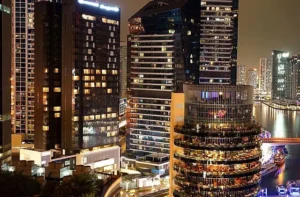

Dubai’s real estate market reflects the city’s evolving population profile. As residents arrive for work, business, and lifestyle opportunities, housing demand adjusts across neighborhoods and property types. Analyzing the Dubai population impact on housing demand in 2026 reveals how community development, migration patterns, and demographic preferences interact.
Rather than uniform growth, demand varies based on location, infrastructure, and resident composition.
Established Communities and Resident Retention
Established communities benefit from completed infrastructure, schools, and retail facilities, making them attractive to long-term residents. These areas often experience consistent demand as families and professionals prefer stability and convenience.
In 2026, such neighborhoods continue to retain residents, supporting steady occupancy and property values. Population growth reinforces this trend by introducing new households seeking ready-to-live environments.
Retention rates contribute to lower vacancy and sustained housing demand.
Emerging Districts and Population Distribution
Emerging districts attract residents gradually as projects are completed and amenities become available. Early adopters include investors and residents seeking newer properties at competitive prices.
Population distribution shifts over time as infrastructure improves, leading to increased absorption in these areas. In 2026, several developing communities gain momentum as transport links and lifestyle facilities reach completion.
This phased growth pattern influences how housing demand spreads across the city.
Household Structure and Property Selection
Household composition affects property selection. Single professionals and couples typically choose apartments, while larger households opt for townhouses or villas.
In 2026, multi-generational living arrangements also influence housing choices, increasing demand for larger units. These preferences guide developer offerings and community planning.
Understanding household trends helps explain demand variations across property types.
Economic Stability and Residential Confidence
Economic stability supports population retention and encourages property purchases. Employment security and business growth contribute to resident confidence, which in turn affects housing decisions.
Dubai’s diversified economy provides resilience, supporting steady residential demand even during global uncertainty. In 2026, this stability underpins ongoing population inflows and housing activity.
Resident confidence remains closely tied to broader economic performance.
Urban Planning and Population Management
Dubai’s urban planning strategies aim to align residential supply with population growth. New communities are designed with integrated services to distribute residents more evenly across the city.
In 2026, this approach supports balanced development, reducing pressure on central districts while promoting suburban growth.
Urban planning plays a crucial role in shaping long-term housing demand patterns.
Implications for Buyers and Investors
Population-driven demand creates opportunities across different market segments. Buyers seeking homes prioritize livability, while investors assess rental potential influenced by resident inflows.
Understanding demographic trends enables more informed property selection. In 2026, successful market participation depends on recognizing how population changes affect specific communities.
Housing demand remains closely linked to Dubai’s evolving resident base.
Do established communities attract more residents?
Yes, completed infrastructure and amenities make established areas appealing to new and existing residents.
Are emerging areas risky for buyers?
Emerging areas involve longer development timelines, but may offer growth potential as populations increase.
How do household trends affect property demand?
Household size and lifestyle preferences influence whether buyers choose apartments or larger homes.
Does economic growth impact housing demand?
Economic stability supports population retention and residential confidence.
Can population growth lead to oversupply?
Developers adjust supply based on demand, although localized oversupply can occur in rapidly developing districts.