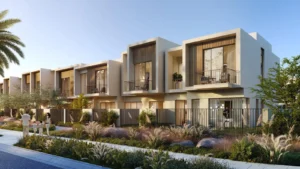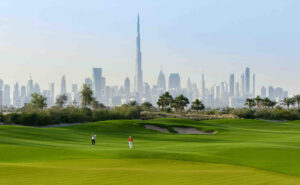

Tilal Binghatti is being evaluated by investors for its price efficiency, rental yield potential, and positioning within Dubai’s mid-market apartment segment. The critical question is whether this project delivers strong real estate ROI Dubai or simply competes in an already saturated investor-driven zone.
This analysis focuses on actual numbers—property price Dubai benchmarks, rental income Dubai projections, and risk-adjusted returns—so investors can determine if Tilal Binghatti fits a yield-focused or balanced investment strategy.
Market Context: Apartments vs Villas, Yield vs Appreciation
Dubai’s 2026 market continues to favor apartments for rental yield and liquidity, while villas dominate appreciation cycles due to supply constraints.
Mid-market apartment developments by Binghatti Developers are typically positioned for yield-driven investors. These projects prioritize affordability and rental demand rather than exclusivity or branding premiums.
This matters because Tilal Binghatti sits in a segment where rental income performance is stronger, but long-term appreciation depends on broader area development rather than scarcity.
Tilal Binghatti Price, Payment Plan & Cost Structure
Tilal Binghatti price levels in 2026 generally range from AED 650K to AED 1.6M, depending on unit size and layout efficiency. This places it firmly within Dubai’s accessible investment bracket.
Price per sq. ft. typically falls between AED 1,000 and AED 1,400, which is competitive relative to other mid-market developments. This pricing indicates a yield-oriented positioning rather than premium valuation.
Payment plans are often flexible, commonly structured around 60/40 or post-handover options, reducing initial capital burden and improving investor entry feasibility. Service charges are expected between AED 10–13 per sq. ft., which supports better net ROI retention.
From a valuation standpoint, the project is fairly priced with no significant premium, but also limited underpricing advantage.
Tilal Binghatti ROI & Rental Yield Analysis
Tilal Binghatti offers gross rental yields in the range of 6.5% to 8%, which aligns with Dubai’s high-yield apartment segments.
After deducting service charges, vacancy, and maintenance, net ROI typically falls between 5.5% and 6.8%. This positions it as a strong income-generating asset compared to waterfront or branded developments.
Studio and one-bedroom units tend to deliver the highest yield efficiency due to lower entry price and consistent tenant demand.
Location Analysis: Demand Drivers and Connectivity
Tilal Binghatti is located in Dubai Silicon Oasis, an area known for steady rental demand driven by professionals and small families. Connectivity to Downtown Dubai and major highways ensures accessibility to employment hubs.
Compared to Dubai Marina, entry prices are significantly lower, which improves yield metrics but reduces global investor appeal.
Infrastructure in the area is well-established, supporting stable occupancy rates rather than speculative growth.
Real Investor Scenario: Practical ROI Breakdown
Assume a one-bedroom unit purchased at AED 900K. At a gross rental yield of 7.5%, annual rental income would be approximately AED 67,500.
After deducting service charges of around AED 9,000 and accounting for vacancy and maintenance, net income reduces to roughly AED 54,000. This results in a net ROI of approximately 6%.
If optimized for furnished rentals, income could increase marginally, but long-term leasing remains the more stable strategy in this segment.
Competitor Comparison: Price vs Yield vs Liquidity
Compared to Jumeirah Village Circle, Tilal Binghatti offers similar yield potential but slightly lower liquidity due to JVC’s higher transaction volume.
Against Business Bay, it delivers higher yield at a significantly lower entry price, but lacks the same level of corporate tenant demand.
Relative to Dubai Silicon Oasis peers, pricing is competitive with no major premium, making it a neutral-to-positive entry point.
Who Should Invest in Tilal Binghatti
Tilal Binghatti is suitable for investors seeking high rental yield with relatively low capital entry. It aligns with portfolios focused on consistent cash flow and stable occupancy.
It is not ideal for investors targeting luxury appreciation or brand-driven resale premiums. It also does not suit short-term speculative investors expecting rapid price growth.
Risks & Limitations
The primary risk lies in supply concentration within the mid-market apartment segment, which can cap rental growth over time.
Appreciation potential is moderate and depends heavily on overall market cycles rather than project-specific uniqueness.
Resale liquidity, while stable, is influenced by competition from similar inventory in the same price bracket.
Rental demand remains strong, but price appreciation may lag compared to premium locations.
Strategic Investment Insight
Entry at pre-launch or early construction phases can improve pricing advantage, as mid-market projects rarely see sharp post-handover appreciation.
A holding period of 4–6 years is optimal to maximize rental income while benefiting from gradual market growth.
Exit strategy should focus on selling into investor demand cycles when yields remain attractive relative to interest rates.
Final Verdict: Investment Classification
Tilal Binghatti is a yield-focused investment with strong rental income potential and moderate appreciation.
It offers above-average ROI compared to most Dubai assets but lacks the scarcity and premium positioning required for significant capital growth.
FAQs
• What is the price of Tilal Binghatti in 2026?
Prices range from AED 650K to AED 1.6M depending on unit size. It is positioned in the affordable investment segment.
• What rental yield can investors expect?
Gross yields range from 6.5% to 8%. Net ROI typically falls between 5.5% and 6.8%.
• Is Tilal Binghatti a high-yield investment?
Yes, it is considered a strong yield-generating asset. It outperforms many premium projects in rental returns.
• How does it compare to JVC?
It offers similar yields but slightly lower liquidity. JVC has higher transaction volume and demand.
• Are service charges reasonable?
Yes, typically between AED 10–13 per sq. ft. This supports higher net ROI retention.
• Is short-term rental viable here?
Limited compared to tourist areas. Long-term rentals provide more stable income.
• What is the ideal holding period?
A 4–6 year holding period is recommended. This allows steady income and gradual appreciation.
• Is the location good for tenants?
Yes, demand is driven by professionals and families. Occupancy rates remain stable.
• What are the main risks?
Supply competition and limited appreciation are key risks. Market cycles also impact resale value.
• Should first-time investors consider this project?
Yes, especially for income-focused strategies. It offers low entry price with strong rental yield.