Most mid-market projects in Dubai appear similar at first glance, offering affordable pricing, flexible payment plans, and attractive rental projections. However, experienced investors know that real value is not found in marketing claims but in how the numbers actually perform over time. The key question is whether a project can generate consistent income while maintaining stability in a competitive segment.
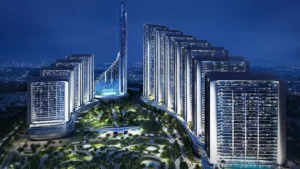
Binghatti Square 2 is positioned as an entry-level investment within Dubailand, specifically in the Wadi Al Safa corridor. It targets buyers who are looking for accessibility rather than exclusivity, and rental income rather than long-term luxury appreciation. This makes it fundamentally different from premium communities, and it must be evaluated on those terms.
This analysis focuses on the actual investment case behind Binghatti Square 2, including pricing, rental demand, returns, and risks, so that investors can make a decision based on realistic expectations rather than assumptions.
Project Positioning: What You Are Really Investing In
Binghatti Square 2 is not designed as a high-end residential project. Its primary appeal lies in its practicality and affordability. The development offers studios, one-bedroom, and two-bedroom apartments that are designed to maximize usable space rather than deliver premium features. This approach directly aligns with rental demand in the area.
The project is built around a clear concept: attracting tenants who are price-sensitive but require functional and well-connected living spaces. This includes working professionals, small families, and individuals employed in nearby commercial zones. As a result, the investment case is driven by occupancy and rental turnover rather than exclusivity or brand-driven demand.
Understanding this positioning is critical because it defines how the asset performs. This is not a property that gains value through prestige—it performs through consistent tenant demand.
Binghatti Square 2 Price Analysis
The pricing of Binghatti Square 2 reflects its mid-market positioning. Studio units are expected to range between AED 550,000 and AED 680,000, while one-bedroom apartments fall between AED 720,000 and AED 900,000. Two-bedroom units extend up to approximately AED 1.35 million depending on size and layout.
On a per square foot basis, prices typically range from AED 900 to AED 1,150. This places the project significantly below central Dubai locations such as Business Bay and Dubai Hills Estate, where prices are considerably higher.
For investors, this lower entry point reduces the financial barrier to entry and increases the potential for higher percentage-based returns. However, it also indicates that the project operates within a segment that has natural limits on price growth.
Payment Plan and Financial Accessibility
One of the strongest aspects of Binghatti Square 2 is its payment structure. The project is expected to follow a construction-linked plan, allowing buyers to spread payments across multiple stages rather than committing large capital upfront.
This approach makes the project accessible to a wider range of investors. It also allows buyers to manage cash flow more effectively, especially those who are building a diversified property portfolio. The flexibility in payment structure is not just a convenience—it directly supports investment strategy by reducing financial pressure during the construction phase.
Rental Demand and Market Reality
The Dubailand and Wadi Al Safa areas are driven by affordability-based demand. Tenants in this segment are typically looking for practical housing options with good connectivity rather than premium lifestyle features. This creates a consistent pool of renters, particularly among mid-income professionals.
Current rental benchmarks suggest that studios can achieve between AED 40,000 and AED 50,000 annually, while one-bedroom units range from AED 55,000 to AED 70,000. Two-bedroom apartments can reach up to AED 95,000 depending on layout and building quality.
This level of demand provides stability, but it is also competitive. Multiple projects in the same price range mean tenants have options, which can limit aggressive rental growth.
ROI Breakdown: What Returns Look Like
Based on current rental trends and pricing, Binghatti Square 2 offers gross returns in the range of 7 percent to 9 percent. After deducting service charges, maintenance, and potential vacancy periods, net returns typically fall between 5.5 percent and 7 percent.
These returns are relatively strong when compared to premium areas, where higher purchase prices often reduce yield percentages. However, they are dependent on maintaining consistent occupancy and competitive rental pricing.
This confirms that Binghatti Square 2 functions primarily as a yield-focused investment rather than an appreciation-driven asset.
Real Investor Scenario
Consider an investor purchasing a one-bedroom apartment for AED 800,000. After adding the standard 4 percent registration fee, the total investment comes to approximately AED 832,000. If the property is rented for AED 65,000 annually, the gross return approaches 7.8 percent.
After accounting for service charges of around AED 8,000 and minor maintenance costs, the net return remains close to 6.8 percent. This demonstrates that the property can generate consistent income, provided occupancy is maintained.
The key takeaway from this scenario is that returns are stable but not exceptional. The investment works best when viewed as a steady income source rather than a high-growth asset.
Location Analysis: Practical Advantages with Limitations
Binghatti Square 2 benefits from its location within Dubailand, with access to key road networks that connect it to Business Bay, Downtown Dubai, and surrounding areas. It is also close to employment hubs such as Silicon Oasis and Academic City, which support rental demand.
However, the location does not offer the same level of lifestyle infrastructure as central Dubai. Retail, entertainment, and premium amenities are still developing, which affects its appeal for higher-end tenants.
This creates a clear distinction. The location is functional and demand-driven, but it does not carry the same long-term prestige or pricing power as more established communities.
Comparison with Other Investment Options
When compared to projects in Business Bay or Dubai Hills Estate, Binghatti Square 2 offers a much lower entry price and higher yield potential. However, those premium areas provide stronger resale value and long-term appreciation.
Within Dubailand, the competition is more direct. Multiple projects offer similar pricing and rental potential, which means differentiation comes down to design, layout efficiency, and execution quality rather than location alone.
This reinforces the idea that Binghatti Square 2 is part of a broader mid-market ecosystem rather than a standout luxury investment.
Risks and Limitations
The biggest risk associated with Binghatti Square 2 is oversupply. The Dubailand area has a high number of similar developments, which can create competition for both tenants and buyers. This can limit rental growth and put pressure on resale prices.
Another limitation is the ceiling on appreciation. Mid-market properties tend to grow more slowly in value compared to premium locations. While they provide stable income, they rarely deliver significant capital gains in a short period.
Service charges and ongoing costs also need to be considered, as they directly impact net returns. Investors who ignore these factors may overestimate profitability.
Strategic Insight: Where the Real Value Lies
The real value of Binghatti Square 2 lies in its ability to generate consistent rental income rather than deliver strong capital appreciation. Investors who approach it with a yield-focused mindset are more likely to achieve their expected outcomes.
Success with this type of property depends on entering at the right price, maintaining high occupancy, and managing costs effectively. It is a strategy built on steady performance rather than rapid growth.
Conclusion: What the Numbers Actually Tell You
Binghatti Square 2 represents a practical investment within Dubai’s mid-market segment. It offers a lower entry point, relatively strong rental yields, and consistent demand from a large tenant base.
However, it does not offer the same growth potential as premium communities. The numbers clearly show that this is a cash-flow-driven asset, not a speculative investment.
For investors who prioritize rental income and stability, the project provides a logical opportunity. For those seeking long-term appreciation or prestige-driven value, other areas may be more suitable.
The decision ultimately depends on aligning the investment with your financial goals and understanding that this asset is built for income, not rapid growth.
FAQs
Is Binghatti Square 2 a good investment in Dubai?
Binghatti Square 2 is a strong option for investors focused on rental income. It offers steady returns due to its affordability and consistent tenant demand, but it is not ideal for those seeking high capital appreciation.
What is the expected ROI for Binghatti Square 2?
Investors can expect gross rental yields between 7 percent and 9 percent. After deducting service charges and expenses, net returns typically range from 5.5 percent to 7 percent.
What is the starting price of Binghatti Square 2?
Prices are expected to start from approximately AED 550,000 for studio apartments, with one-bedroom units starting around AED 720,000.
Where is Binghatti Square 2 located?
The project is located in the Dubailand area, specifically within the Wadi Al Safa corridor, with good connectivity to major roads and nearby business hubs.
Is Binghatti Square 2 good for rental income?
Yes, the project is designed for rental efficiency. Its location and pricing attract mid-income tenants, making it suitable for consistent rental returns.
What are the main risks of investing in Binghatti Square 2?
The main risks include high competition from similar mid-market projects, limited long-term price appreciation, and potential pressure on rental rates due to supply.
Who should invest in Binghatti Square 2?
It is best suited for investors looking for affordable entry into Dubai real estate and those prioritizing steady rental income over long-term capital growth.