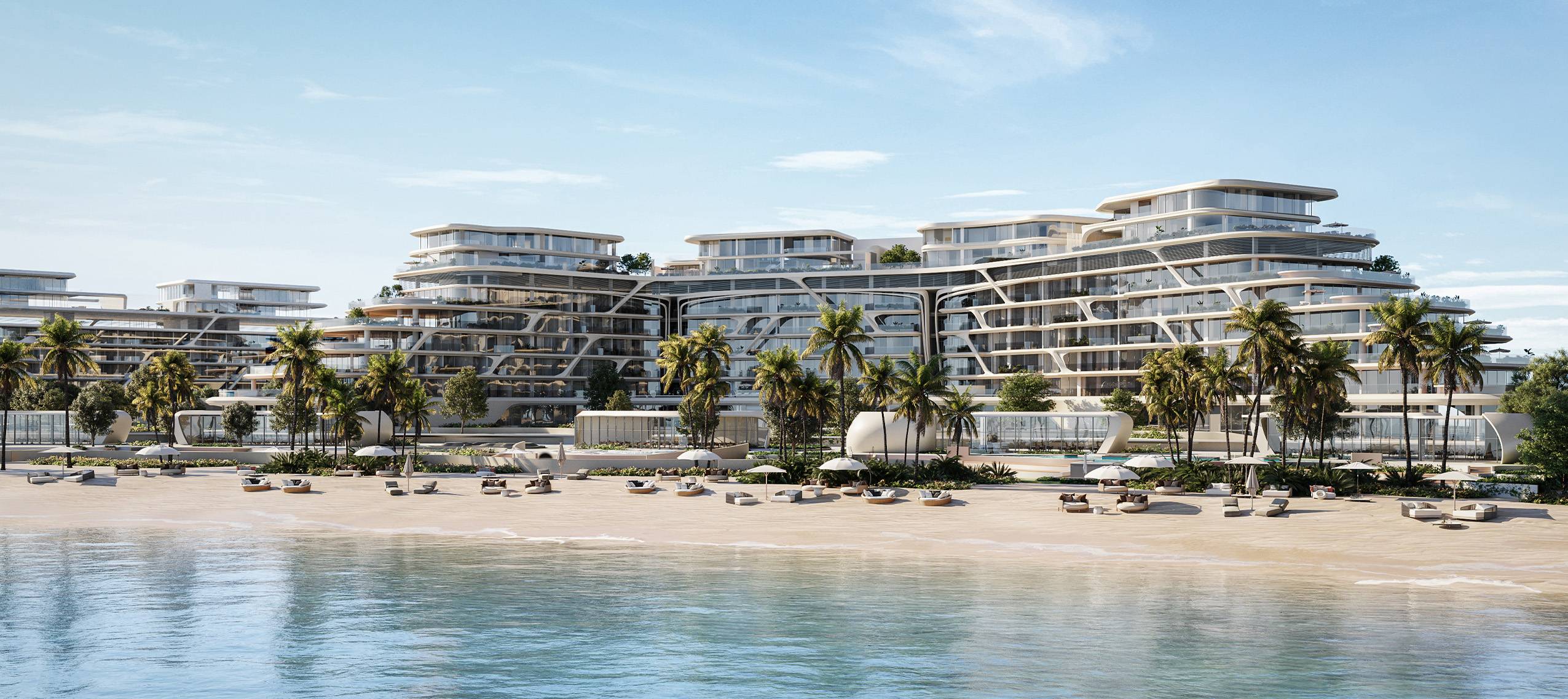
Jacob Co Beachfront Living is being evaluated for its price positioning, rental yield, and long-term investment viability in Dubai’s ultra-luxury segment. The central investor question is whether this asset generates meaningful real estate ROI Dubai or primarily functions as a prestige-driven capital store.
This analysis focuses on property price Dubai benchmarks, realistic rental income Dubai projections, and risk-adjusted returns to determine if Jacob Co Beachfront Living fits a yield-driven, appreciation-led, or hybrid investment strategy.
Market Context: Ultra-Luxury vs Yield-Oriented Assets
Dubai’s 2026 real estate landscape shows a clear divide between income-generating apartments and ultra-luxury branded residences. Apartments in mid-market zones deliver higher rental yield, while ultra-luxury beachfront assets prioritize capital preservation and appreciation.
Developments associated with Jacob & Co fall into a niche segment where pricing reflects brand equity and exclusivity rather than rental efficiency. This shifts the investment thesis from income generation to wealth storage and long-term appreciation.
For investors, this means evaluating not just yield, but global buyer demand and scarcity-driven valuation resilience.
Jacob Co Beachfront Living Price, Payment Plan & Cost Structure
Jacob Co Beachfront Living price levels in 2026 are positioned firmly in the ultra-luxury bracket, with units typically starting from AED 8M and exceeding AED 25M for premium configurations.
Price per sq. ft. ranges between AED 4,500 and AED 7,500, significantly above Dubai’s average and even above many luxury waterfront projects. This reflects a strong branding premium combined with beachfront scarcity.
Payment plans are generally structured around 60/40 or 70/30, but high upfront commitments are common due to the asset class. Service charges are expected in the AED 25–40 per sq. ft. range, which materially impacts net ROI.
From a valuation perspective, the project is fully priced with a substantial brand premium already embedded, leaving limited room for short-term price arbitrage.
Jacob Co Beachfront Living ROI & Rental Yield Analysis
Rental yield for Jacob Co Beachfront Living is structurally lower than the broader Dubai market. Gross yields typically range between 3% and 4.5%, reflecting high entry cost relative to rental income.
After accounting for service charges, maintenance, and vacancy, net ROI generally compresses to 2.5%–3.5%. This positions the asset well below mid-market yield benchmarks but consistent with ultra-luxury global real estate.
Short-term rental strategies may slightly improve returns, but operational costs and seasonality limit net gains. Yield is not the primary investment driver in this segment.
Location Analysis: Prime Waterfront Positioning
The project is located within Dubai Maritime City, a developing coastal zone positioned between old Dubai and emerging luxury corridors. Connectivity to Downtown Dubai and Dubai International Airport supports accessibility for high-net-worth residents.
Compared to Palm Jumeirah, pricing may appear relatively competitive at entry level, but Palm retains stronger global recognition and resale liquidity.
For investors, location offers long-term upside due to ongoing development, but it does not yet match the maturity of established ultra-luxury zones.
Real Investor Scenario: Financial Reality Check
Assume an entry-level unit priced at AED 10M. At a gross rental yield of 4%, annual rental income would be approximately AED 400,000.
After deducting service charges of around AED 120,000 and accounting for maintenance and vacancy, net income reduces to roughly AED 280,000. This results in a net ROI of approximately 2.8%.
Even with premium short-term rental positioning, net ROI is unlikely to exceed 3.5%, reinforcing that income generation is secondary.
Competitor Comparison: Price vs Yield vs Liquidity
Compared to Palm Jumeirah, Jacob Co Beachfront Living offers similar luxury positioning but slightly lower liquidity due to Palm’s established global demand.
Against Dubai Marina, it trades at a significantly higher price with substantially lower rental yield, reflecting its ultra-luxury positioning.
Relative to other branded residences, the project carries one of the highest brand premiums, which increases resale dependence on niche buyer segments.
Who Should Invest in Jacob Co Beachfront Living
This project is suitable for ultra-high-net-worth investors seeking capital preservation, portfolio diversification, and exposure to branded luxury real estate. It aligns with wealth allocation strategies rather than income generation.
It is not suitable for yield-focused investors or those relying on rental income for cash flow. It also does not fit short-term speculative strategies due to limited pricing inefficiency.
Risks & Limitations
The primary risk is yield compression due to high acquisition cost and elevated service charges. Rental income does not scale proportionally with price.
Resale liquidity depends on a narrow buyer pool, which can extend exit timelines during market slowdowns.
Location maturity remains a factor, as Dubai Maritime City is still evolving compared to established luxury districts.
Market cycles disproportionately impact ultra-luxury assets, increasing volatility in resale pricing.
Strategic Investment Insight
Entry timing is critical, with early-phase acquisition offering the only meaningful pricing advantage. Post-launch pricing typically reflects full brand premium.
A holding period of 7–10 years is required to realize appreciation potential, particularly as the surrounding area develops.
Exit strategy should target global wealth cycles and periods of strong international demand for branded luxury assets.
Final Verdict: Investment Classification
Jacob Co Beachfront Living is an appreciation-focused luxury asset with low yield characteristics.
It offers strong brand-driven positioning and long-term capital preservation, but limited rental ROI, making it unsuitable for income-focused investment strategies.
FAQs
• What is the price of Jacob Co Beachfront Living in 2026?
Prices start from around AED 8M and can exceed AED 25M. It is positioned in the ultra-luxury segment.
• What rental yield can investors expect?
Gross yields range from 3% to 4.5%. Net ROI typically falls between 2.5% and 3.5%.
• Is this a good investment for rental income?
No, rental income is relatively low. It is primarily an appreciation-driven asset.
• How does it compare to Palm Jumeirah?
It offers similar luxury positioning but lower liquidity. Palm has stronger global demand and resale stability.
• Are service charges high?
Yes, typically between AED 25–40 per sq. ft. This significantly reduces net ROI.
• Is short-term rental viable here?
Yes, but it does not drastically improve returns. High costs limit net yield gains.
• What is the ideal holding period?
A 7–10 year holding period is recommended. This allows time for appreciation and area development.
• Is the location strong for investors?
It has long-term potential but is still developing. It lacks the maturity of established luxury zones.
• What are the main risks?
Low yield, limited liquidity, and market cycle sensitivity are key risks. Brand premium sustainability is also a factor.
• Should first-time investors consider this project?
No, it is better suited for experienced high-net-worth investors. It requires a long-term wealth strategy.