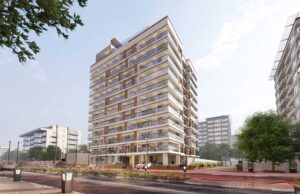
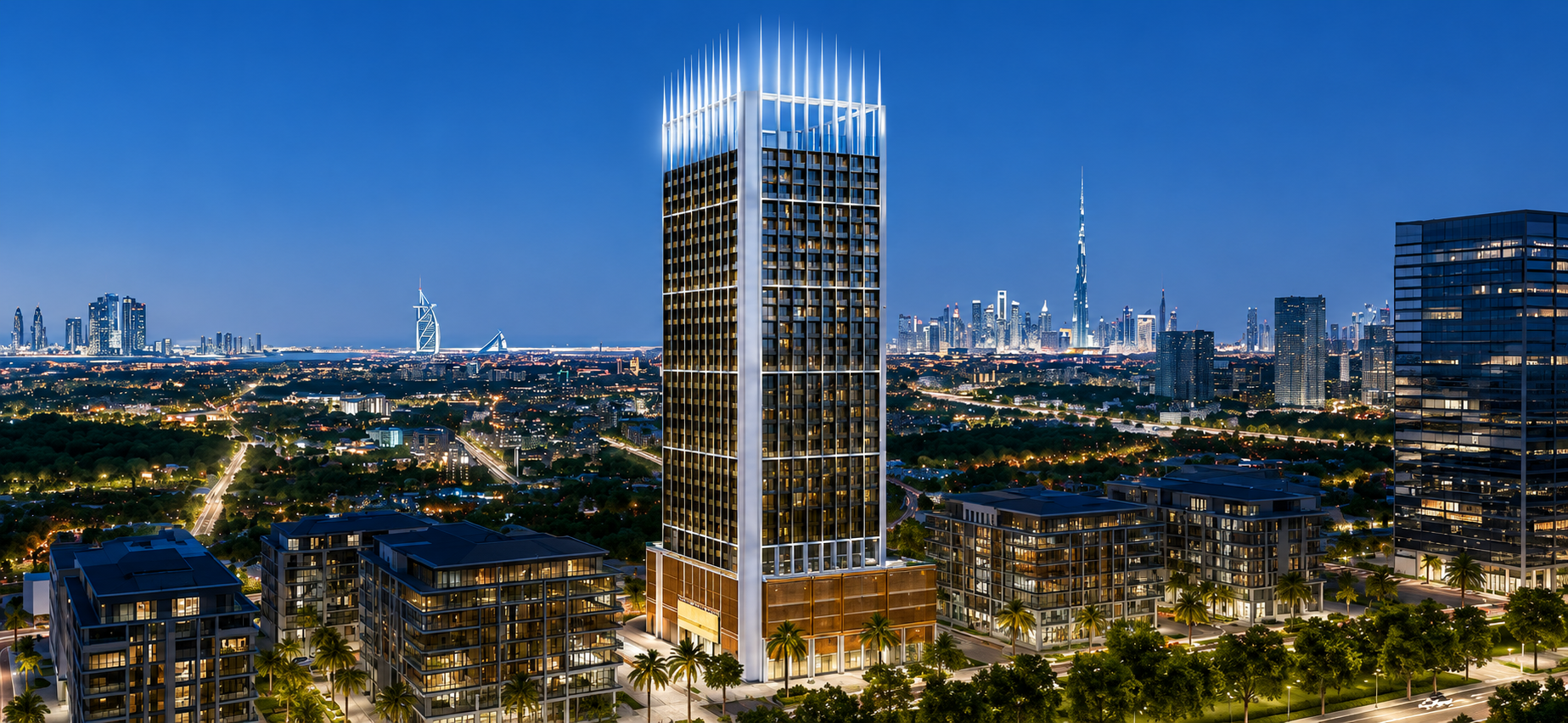
Developed by Binghatti Developers within Jumeirah Village Circle, Binghatti Square 3 benefits from one of the city’s most active residential rental markets. Binghatti Square 3 enters the market at a time when investors are becoming more selective about where they allocate capital within Dubai. Broad market appreciation is no longer enough. Investors increasingly need projects that combine realistic rental income with a credible path toward future value creation. That positioning creates a different investment profile compared with infrastructure-led communities where investors wait years for demand to mature.
The key question is whether the project’s pricing, rental prospects, and resale potential justify the investment relative to competing opportunities across Dubai.
Why Binghatti Square 3 Is Operating in a Different Market Cycle
Not all Dubai communities respond to market conditions in the same way.
Jumeirah Village Circle has evolved into one of the city’s most liquid residential submarkets. Unlike emerging districts that depend heavily on future infrastructure, JVC already possesses established tenant demand and active resale activity.
For investors, this reduces one major risk.
Demand does not need to be created. It already exists.
The challenge becomes identifying whether current launch pricing leaves enough room for future appreciation after several years of strong market performance.
How Binghatti Square 3 Compares to Nearby Property Prices
Pricing discipline remains one of the most important determinants of future returns.
Current apartment transactions across JVC generally range between AED 1,300 and AED 1,900 per square foot depending on building quality, developer reputation, and completion status.
Binghatti Square 3 sits within a market where pricing has appreciated significantly over recent years. This means investors are entering a more mature phase of the growth cycle compared with districts such as Dubai South.
That does not eliminate upside potential.
It simply shifts the investment thesis from deep-value appreciation toward a combination of rental income and moderate capital growth.
Investors evaluating property price Dubai trends should recognize that mature communities often generate steadier performance but lower appreciation volatility.
Measuring Binghatti Square 3 Rental Yield Against Purchase Costs
For many investors, rental yield will be the primary attraction.
JVC consistently ranks among the strongest rental markets in Dubai because affordability attracts a broad tenant base while occupancy levels remain relatively resilient.
A typical apartment purchased for AED 1.2 million and leased for approximately AED 90,000 annually would generate a gross yield of around 7.5%.
After accounting for service charges, maintenance reserves, leasing costs, and vacancy assumptions, net rental yields could reasonably fall between 5.5% and 6.5%.
Compared with premium districts such as Downtown Dubai or Dubai Marina, Binghatti Square 3 may offer a better yield profile despite lower headline rental rates.
This makes the project particularly relevant for investors prioritizing rental income Dubai over speculative appreciation.
Why Tenant Demand May Remain Durable for Years
The strongest rental investments typically attract diverse tenant groups.
Binghatti Square 3 benefits from demand generated by professionals, families, entrepreneurs, and remote workers seeking relatively affordable access to major business districts.
That tenant diversity matters.
Markets dependent on a single employment sector often experience greater volatility during economic slowdowns.
JVC’s broad demand base creates a more defensive occupancy profile than many specialized residential markets.
This supports rental yield sustainability, which becomes increasingly important during periods of market normalization.
A Practical ROI Model for Binghatti Square 3 Investors
Consider an investor acquiring a unit for AED 1.2 million through an off-plan investment Dubai strategy.
Assume annual rental income stabilizes around AED 90,000 while operating costs reduce net income to approximately AED 72,000.
That produces a net yield of roughly 6%.
If annual appreciation averages 4% to 6% over a five-year period, the property value could reach between AED 1.46 million and AED 1.61 million.
Combining appreciation and rental performance creates a blended annualized return range of approximately 9% to 12%.
The downside scenario deserves equal attention.
If new apartment supply increases faster than tenant demand, rental growth may flatten and appreciation could slow toward low single digits, reducing annual returns closer to 6%–8%.
How Binghatti Square 3 Stacks Up Against Competing Investments
Compared with Dubai South developments, Binghatti Square 3 offers stronger current rental demand but less transformational appreciation potential.
Compared with Business Bay, investors gain a lower entry price while sacrificing some corporate-driven tenant demand.
Compared with Arjan, JVC benefits from a longer operational history and deeper resale liquidity.
For investors seeking the best property investment in Dubai, the choice depends on investment objectives.
Those prioritizing income may find Binghatti Square 3 more compelling than investors seeking maximum long-term capital growth.
Which Investor Profile Is Best Positioned Here?
The project aligns most closely with investors focused on stable cash flow and moderate appreciation.
Buyers seeking high rental yield property UAE opportunities will likely appreciate JVC’s established leasing market and consistent tenant demand.
End-users may also benefit because the surrounding community already supports daily residential activity rather than depending on future development phases.
Short-term speculators should remain cautious because mature communities often produce steadier rather than explosive price movements.
The Risks Investors Should Factor Into Return Expectations
Supply pressure remains the primary concern.
JVC continues to attract new residential launches, creating ongoing competition among landlords and sellers.
Market saturation can place temporary pressure on rents and resale values, particularly for smaller apartment formats.
Liquidity risk is lower than many emerging districts but still exists during weaker market conditions.
Investors should also recognize that future appreciation rates may not match those achieved during Dubai’s recent growth cycle.
Expectations anchored to exceptional historical gains may prove unrealistic.
The Hidden Variable Supporting Binghatti Square 3
Many investors focus exclusively on rental yield.
Institutional investors often evaluate exit flexibility.
One advantage of Binghatti Square 3 is its location within a community where transaction volumes remain consistently active.
Higher liquidity creates optionality.
Investors can refinance, lease, or exit more efficiently than in many emerging districts where buyer pools remain limited.
That flexibility carries real value, particularly when market conditions change unexpectedly.
Final Verdict: Is Binghatti Square 3 Worth Investing In?
Binghatti Square 3 offers one of the more balanced investment profiles currently available within Dubai’s apartment sector.
Its strongest advantages include reliable tenant demand, competitive rental yields, established community infrastructure, and stronger resale liquidity compared with many off-plan alternatives.
The project’s primary limitations involve ongoing supply competition and potentially lower appreciation rates than infrastructure-led growth corridors.
For investors seeking real estate ROI Dubai through consistent rental performance and manageable risk, Binghatti Square 3 presents a compelling case.
For investors prioritizing aggressive capital appreciation, emerging districts may offer greater upside, albeit with significantly higher uncertainty.
Viewed through a risk-adjusted investment framework, Binghatti Square 3 appears more attractive as a cash-flow-oriented asset than a speculative growth play.
FAQs
- Can Binghatti Square 3 generate strong rental returns?
Current market conditions suggest rental yields could remain competitive due to sustained tenant demand across Jumeirah Village Circle. - What is a realistic ROI expectation for investors?
A blended annual return between 9% and 12% appears achievable under stable rental and appreciation assumptions. - Is Binghatti Square 3 overpriced relative to JVC?
The answer depends on launch pricing, but investors should compare rates against prevailing JVC price-per-square-foot benchmarks. - How does the project compare with Dubai South investments?
Binghatti Square 3 offers stronger immediate rental demand, while Dubai South may provide greater long-term appreciation potential. - Will rental demand remain sustainable after completion?
JVC’s broad tenant base supports occupancy stability, reducing dependence on a single economic sector. - Does the payment plan improve investment efficiency?
Flexible payment schedules can enhance capital deployment by reducing initial cash requirements during construction. - What is the biggest risk facing investors?
Future residential supply growth within JVC remains the largest variable affecting rents and pricing momentum. - Is Binghatti Square 3 suitable for first-time property investors?
Its established location and predictable demand profile may appeal to investors seeking lower execution risk. - How liquid is the resale market likely to be?
JVC typically experiences stronger transaction activity than emerging communities, supporting relatively healthy resale liquidity. - Who benefits most from investing in Binghatti Square 3?
Income-focused investors seeking a balance between rental cash flow and moderate appreciation are likely the strongest fit.