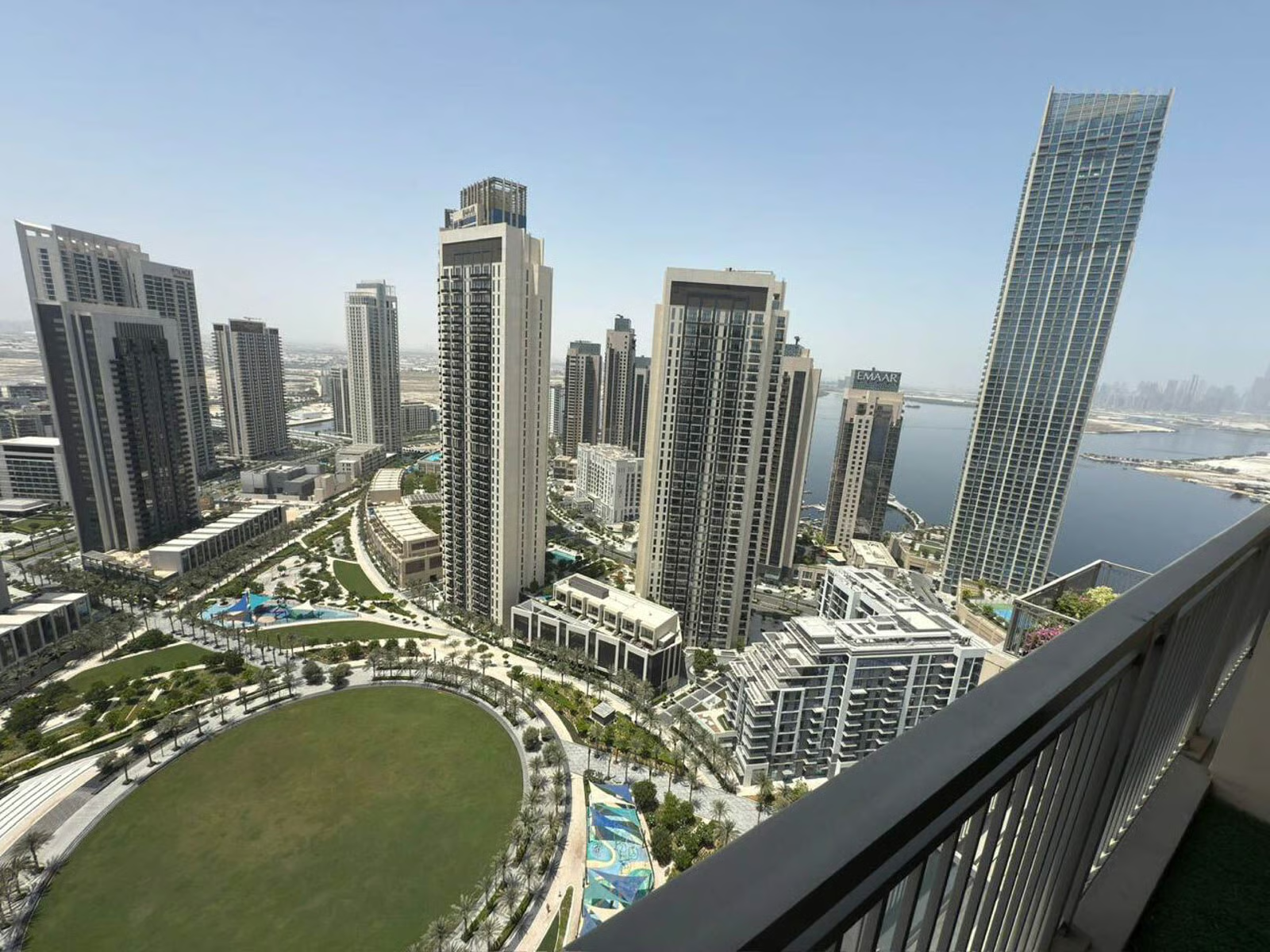
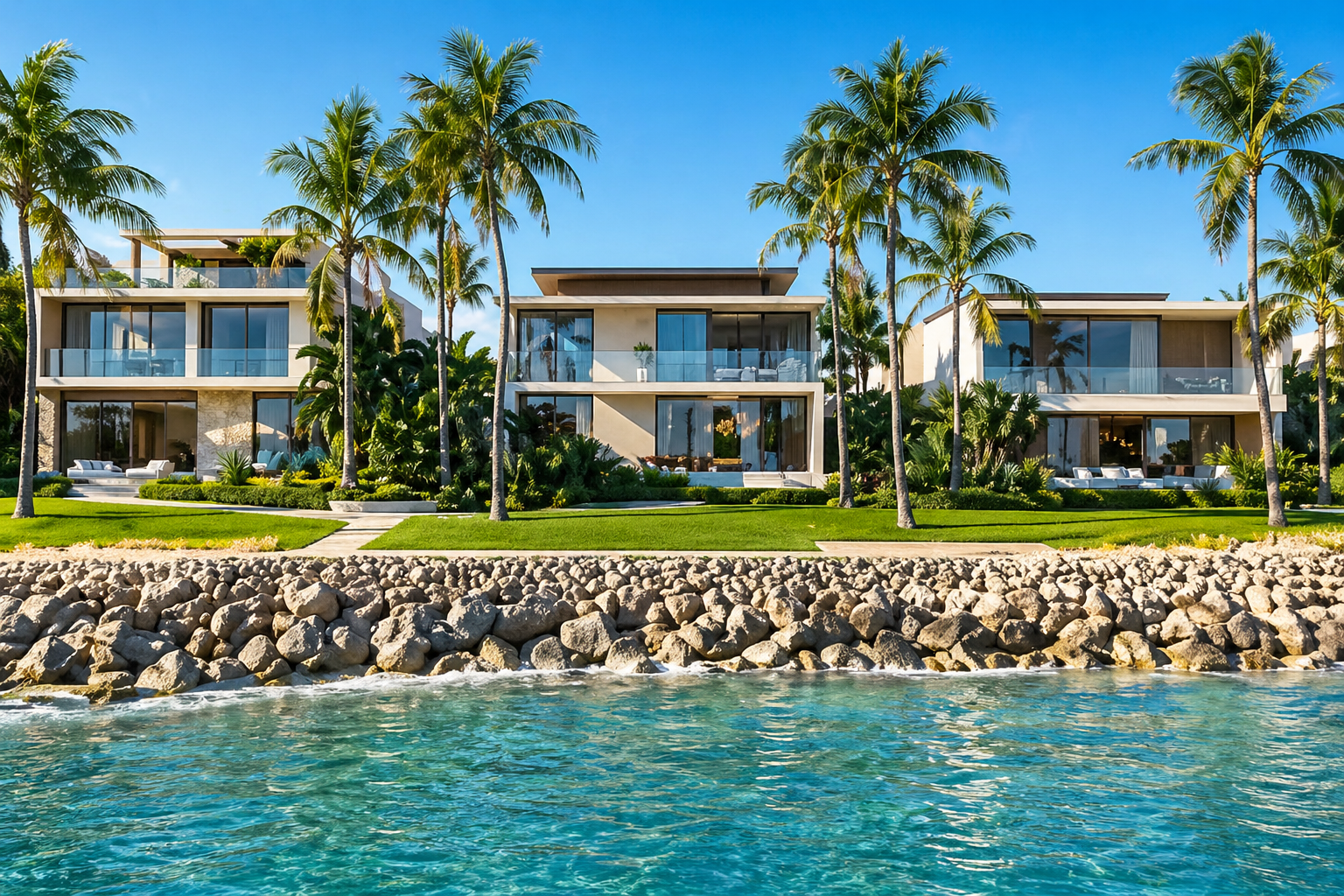
Nakheel has historically shaped premium waterfront supply in Dubai, and nakheel bay villas sit within this same thesis: limited beachfront inventory targeting high-net-worth buyers. The current cycle in Dubai real estate is not purely speculative; it is driven by population inflow, tax advantages, and liquidity from global investors seeking yield plus capital safety.
What matters is not the narrative but positioning. Waterfront villa supply remains structurally constrained, but pricing has already absorbed much of that premium. This creates a narrow margin between justified value and overpricing.
Where nakheel bay villas sit in the pricing curve
The average price for nakheel bay villas typically ranges between AED 3.5M to AED 6M depending on unit size and view orientation. On a per-square-foot basis, this places the project in the upper quartile of Dubai’s villa market.
Compared to broader property price Dubai benchmarks, this is a 20–35% premium over inland villa communities. That premium is justified only if rental income and capital appreciation remain aligned with waterfront demand.
Transaction costs must also be factored. A 4% Dubai Land Department fee, brokerage, and furnishing can push total acquisition cost 7–9% higher than base price. This compresses effective ROI in the early years.
Income generation vs capital lock-in reality
Rental yield for nakheel bay villas is expected in the range of 4% to 5.5% annually. This is below apartment yields in areas like JVC but aligns with luxury villa benchmarks.
The critical factor is tenant profile. High-end waterfront villas rely on expatriate executives and short-term luxury leasing demand. Vacancy risk is lower in prime waterfront zones but tenant turnover costs are significantly higher.
From a real estate ROI Dubai perspective, investors should expect moderate yield with stronger reliance on capital appreciation rather than cash flow.
Demand dynamics tied to coastal lifestyle
The project benefits from its placement in Dubai Islands, a location positioned as a future tourism and lifestyle hub. This matters because demand is not purely residential—it is lifestyle-driven.
Infrastructure expansion, hospitality developments, and beach access create a hybrid demand model combining end-users and short-term rental operators. However, this demand is still partially forward-looking, meaning full maturity is not yet priced into rental income.
A realistic investor scenario with numbers
Assume a purchase price of AED 4.5M. Total acquisition cost moves to roughly AED 4.85M after fees and setup.
Annual rental income at 5% yield generates approximately AED 225,000. After maintenance, service charges, and vacancy adjustments, net yield drops closer to 3.8–4.2%.
If capital appreciation averages 6–8% annually over a 5-year horizon, total return becomes attractive. Without appreciation, the investment underperforms compared to mid-market apartments.
How it compares against competing villa options
Communities like Palm Jumeirah and Dubai Hills Estate provide useful benchmarks. Palm Jumeirah commands higher entry prices but offers stronger global branding and short-term rental liquidity.
Dubai Hills Estate delivers slightly better rental yield with lower entry cost but lacks beachfront positioning. Nakheel bay villas sit between these two, offering coastal access at a relatively lower price than Palm but with less established demand.
This middle positioning is both an opportunity and a risk depending on how fast Dubai Islands matures.
Who this investment actually suits
This project is not optimized for yield-focused investors. It fits buyers prioritizing capital preservation, lifestyle exposure, and long-term appreciation.
End-users benefit more due to intangible value from waterfront living. Investors seeking steady rental income may find better efficiency in apartment-heavy communities.
Key risks that impact real returns
The biggest risk is timing. Dubai Islands is still developing, so short-term rental demand may lag expectations.
Luxury villa markets are also cyclical. During downturns, high-ticket properties see lower liquidity and longer exit timelines. Additionally, service costs for villas can erode net returns more than anticipated.
Strategic positioning for capital allocation
Nakheel bay villas should be viewed as a hybrid asset. It is neither a pure income play nor a speculative flip.
The optimal strategy is a 5–7 year holding period, allowing infrastructure and community maturity to drive price appreciation. Short-term investors may face limited upside after transaction costs.
Final investment call: calculated premium, not a bargain
Nakheel bay villas are not undervalued. They are priced as a premium lifestyle asset with moderate ROI potential.
For investors seeking balanced exposure to Dubai’s waterfront growth, this project makes sense. For those chasing high rental yield or quick gains, better alternatives exist within the same market.
The decision ultimately depends on whether you value long-term positioning over immediate returns.
Frequently Asked Questions
- Is nakheel bay villas a high ROI investment?
Returns are moderate, typically driven more by appreciation than rental income. Expect balanced but not aggressive ROI. - What rental yield can investors realistically expect?
Gross yields range around 4–5.5%, with net yields slightly lower after costs and vacancies. - Are nakheel bay villas overpriced compared to the market?
They trade at a premium due to waterfront positioning, but pricing is not excessive if long-term growth materializes. - Is this better than investing in Dubai apartments?
Apartments offer higher rental yield, but villas provide better long-term appreciation potential. - How liquid is this type of property?
Luxury villas have lower liquidity than apartments, especially during market corrections. - What is the biggest investment risk here?
The timeline for Dubai Islands development and demand maturity is the key uncertainty. - Does the payment plan impact ROI?
Flexible payment plans can improve short-term cash flow but do not significantly change long-term returns. - Who should avoid this investment?
Yield-focused investors or short-term flippers may not find this suitable. - Is this good for end-use buyers?
Yes, lifestyle value is strong, especially for waterfront living preferences. - What holding period is ideal for this asset?
A minimum of 5 years is recommended to capture meaningful appreciation.