
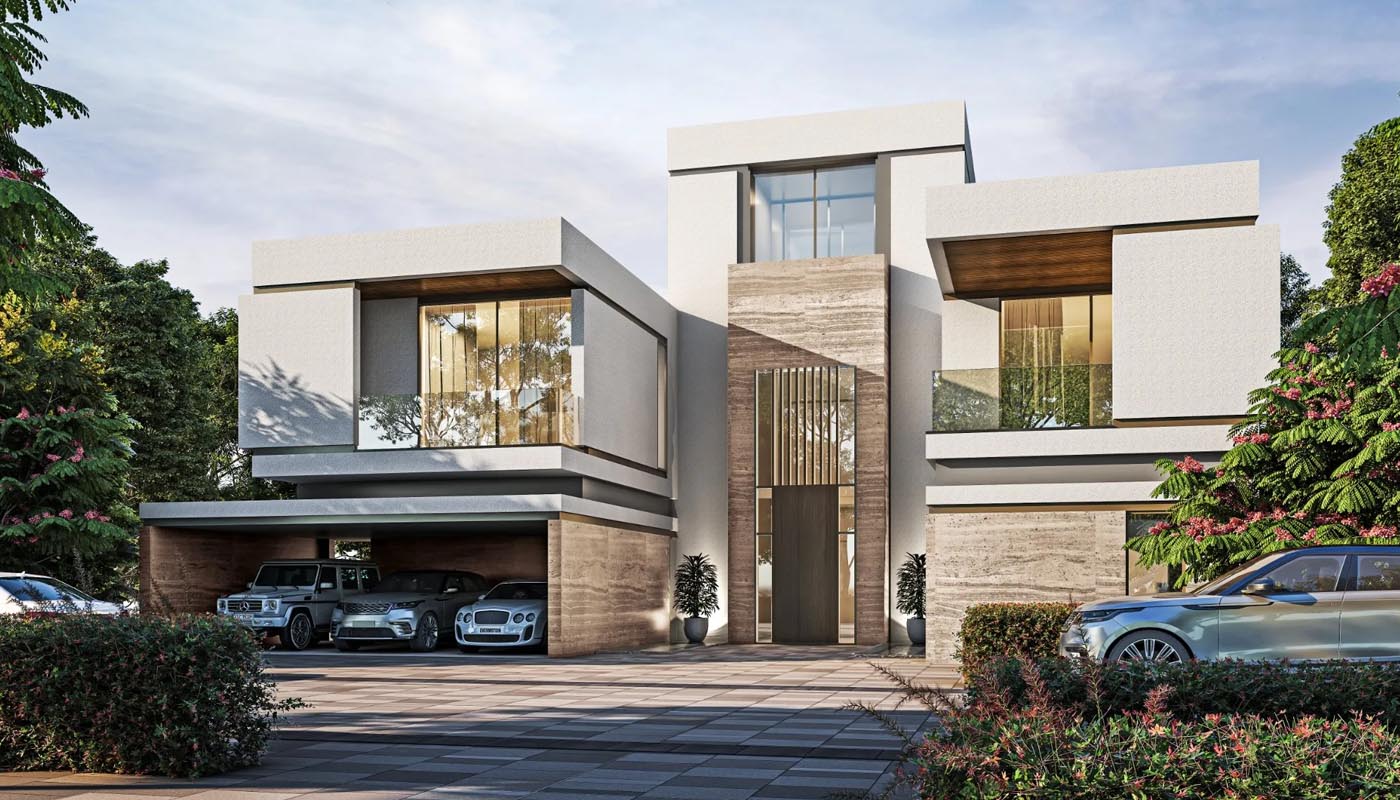
The decision to invest in The Brooks at Sobha Sanctuary comes down to three variables: entry price, achievable rental yield, and realistic appreciation potential. Investors are no longer buying based on branding; they are underwriting cash flow and exit liquidity.
This analysis treats the project as a financial asset, not a lifestyle product. Every section is structured to answer whether the numbers justify capital allocation compared to other Dubai real estate opportunities.
Market positioning of The Brooks at Sobha Sanctuary in 2026
Dubai’s 2026 residential market shows a clear split between apartments delivering higher rental yield and villas/townhouses offering stronger long-term appreciation. The Brooks at Sobha Sanctuary sits in the latter category, which means yield compression but capital upside potential.
Supply in villa communities is rising, especially in emerging corridors like Dubailand and peripheral master-planned zones. Demand remains stable due to end-user migration, but investors must account for slower absorption compared to prime apartment clusters.
This positioning matters because it directly affects liquidity. Villas are harder to exit quickly, which shifts the investment thesis from short-term flipping to mid-to-long-term holding.
Price structure, payment plan, and cost reality
The Brooks at Sobha Sanctuary by Sobha Realty is positioned as a premium villa offering within Dubai. Current pricing typically ranges between AED 3.5M to AED 5.5M depending on unit size and configuration.
Price per square foot is estimated between AED 1,200 and AED 1,500, which places it above mid-market villa communities but below ultra-luxury segments. This indicates a “premium but not prime” positioning.
Payment plans are developer-friendly, usually structured around 60/40 or 70/30 construction-linked schedules. While this reduces upfront burden, it does not change total acquisition cost.
Service charges for villa communities typically range between AED 3 to AED 5 per sq. ft. annually. This directly reduces net rental yield and must be factored into ROI calculations.
From a valuation standpoint, pricing appears slightly aggressive relative to emerging locations, but justified if infrastructure execution and community quality match Sobha’s historical standards.
Rental yield and ROI expectations based on real numbers
Gross rental yield for villas in this segment typically ranges between 4.5% and 6% annually. For The Brooks at Sobha Sanctuary, a realistic expectation is closer to 5% gross yield due to premium pricing.
After deducting service charges, maintenance, vacancy allowance, and management costs, net ROI compresses to approximately 3.5% to 4.2%.
Compared to apartments in areas like Dubai Marina or Jumeirah Village Circle delivering 6–8% yields, this project underperforms on income but compensates through potential appreciation.
This is a capital growth play, not a yield-maximizing asset.
Location dynamics and demand sustainability
The project is located within Sobha Sanctuary, a master-planned gated environment targeting upper mid-income and premium buyers. Connectivity depends heavily on road infrastructure rather than metro access, which limits tenant pool diversity.
Proximity to major highways provides acceptable commute times to central Dubai, but it lacks immediate access to established commercial hubs. This reduces short-term rental demand compared to central districts.
However, long-term infrastructure expansion in Dubai tends to uplift such communities over a 5–8 year horizon. Investors betting on appreciation must be willing to wait for this cycle to play out.
A realistic investor scenario with actual numbers
Consider a 4-bedroom villa priced at AED 4.2M. Annual rental income in current market conditions would likely range between AED 190,000 and AED 220,000.
After deducting service charges of roughly AED 18,000, maintenance of AED 10,000, and vacancy/management buffer of AED 12,000, net income drops to approximately AED 170,000.
This results in a net ROI of around 4.0%. This is stable but not exceptional, reinforcing that the investment thesis relies on price appreciation rather than income.
Competitive comparison with similar Dubai investments
Compared to villa communities in Arabian Ranches, pricing at The Brooks is competitive but lacks the same level of maturity and resale liquidity. Compared to newer developments in DAMAC Hills 2, it is more premium but also more expensive.
Apartment alternatives in central zones offer better rental yield and faster resale cycles, making them more suitable for cash flow-focused investors.
The Brooks sits in the middle: higher quality than budget villa projects but not yet proven like legacy communities.
Investor suitability: who this project works for
This project suits investors prioritizing long-term capital appreciation with moderate rental income stability. It also fits end-users who value community living and brand quality over immediate financial returns.
It is not suitable for investors seeking high rental yield, quick flipping opportunities, or short holding periods under three years.
Risks and structural limitations investors must consider
The primary risk is supply expansion. Dubai’s villa pipeline is increasing, which can suppress both rental growth and resale price acceleration.
Liquidity risk is another factor. Villas typically take longer to sell, especially in non-prime locations, which can delay exit.
Cost overruns, service charge increases, and macroeconomic shifts in Dubai real estate cycles also impact net ROI.
Finally, appreciation is not guaranteed. It depends heavily on infrastructure delivery and sustained demand in the specific micro-location.
Strategic investment insight: timing, holding, and exit
Entry timing is critical. Early-phase investment offers better pricing, but only if the project delivers on quality and timelines.
The ideal holding period is 5–7 years to capture full appreciation cycles in emerging communities. Short-term investors will likely underperform due to transaction costs and limited price movement.
Exit strategy should target end-users rather than investors, as villas are primarily consumed as lifestyle assets rather than yield instruments.
Final verdict: yield vs appreciation classification
The Brooks at Sobha Sanctuary is best classified as a balanced-to-appreciation-focused investment. Yield is stable but not market-leading, while appreciation potential depends on long-term area development.
For investors with patience and a capital growth strategy, it is a viable allocation. For yield-focused portfolios, better alternatives exist within Dubai’s apartment segment.
FAQ section
- What is the starting price of The Brooks at Sobha Sanctuary in 2026?
Prices typically start around AED 3.5M and go up based on size and configuration. Premium units can exceed AED 5M. - What rental yield can investors expect from this project?
Gross yields are around 5%, with net ROI falling between 3.5% and 4.2% after expenses. - Is The Brooks at Sobha Sanctuary a good investment in Dubai?
It is suitable for long-term appreciation, not high rental income. Investors must hold for 5+ years. - How does it compare to apartments in Dubai for ROI?
Apartments offer higher rental yield, while this project offers better lifestyle positioning and potential appreciation. - Who is the developer of The Brooks at Sobha Sanctuary?
The project is developed by Sobha Realty, known for premium construction quality in Dubai. - What is the payment plan structure?
Typical plans are 60/40 or 70/30 construction-linked, reducing initial capital burden. - Is the location good for rental demand?
Rental demand exists but is lower than central Dubai areas due to limited metro connectivity. - What are the major risks in this investment?
Supply increase, slower resale liquidity, and dependency on infrastructure growth are key risks. - Can this property be flipped before completion?
Flipping is possible but not ideal due to limited short-term price movement in villa segments. - What is the ideal holding period for this investment?
A 5–7 year holding period is recommended to realize meaningful capital appreciation.